 HockeySize
 A helmet only protects if it fits. The size charts use head circumference, but the real test is done on your head.
Measure
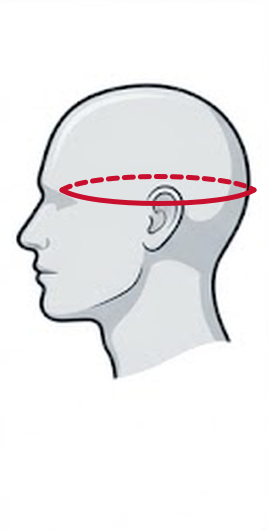
Wrap a tape around the head about 2.5 cm above the eyebrows, over the widest point at the back. Compare with the model’s range: most brands make S, M and L, with youth sizes below, and the ranges overlap so that many heads fit two sizes. Helmets are adjustable within the range, so a head near the top of one size is usually better in the next size adjusted down.
The fit tests
- Position. The front edge sits about one finger-width above the eyebrows. If it rides up, it is too small or too loose.
- Shake test. With the chin strap done up, shake the head side to side and nod. The helmet should move with the head, not on it.
- No pressure points. Snug all around, not tight anywhere. Pressure at the temples or the forehead means the shape is wrong for you; try another model rather than another size.
- Chin strap. Snug enough that only one finger fits between strap and chin.
Cage, visor or full shield
Cages and shields are sized to the helmet size, and each brand’s cage fits its own helmets best. Youth and junior play in most countries requires a full cage; seniors choose between cage, full shield and visor by league rules and preference. Fit the helmet first and buy the facial protection to match its size.
When to replace
Foam degrades with age and sweat. Replace a helmet after any hard impact, if the shell is cracked, or if the certification sticker has expired (HECC stickers carry an expiry date; CE and CSA marks must be present for organised play). As a rule, do not use a helmet older than about six years even if it looks fine.
Common mistakes
- Buying a size up for a child to grow into. A loose helmet rotates on impact.
- Wearing it tilted back to see better. That exposes the forehead.
- Reusing an old cage on a new helmet without checking the mounting points match.