 HockeySize
 Shin guards are sized in inches by the length of the guard, and the measurement that matters is from the centre of the kneecap to the top of the skate boot.
Measure
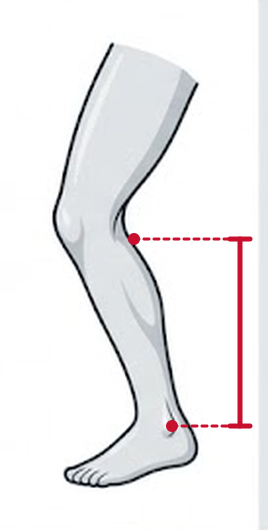
Sit with the knee bent at 90 degrees. Measure from the centre of the kneecap down to the centre of the ankle bone on the outside of the leg, or to where the skate boot will sit. Compare with the chart. If you are between sizes, the tongue question below decides.
Tongue in or tongue out
Some players wear the skate tongue over the shin guard (tongue out), others tuck the guard behind it (tongue in). Tongue-out needs a guard that ends right at the top of the boot; tongue-in needs about 2 cm less so the guard can slide behind the tongue. CCM prints both ranges on its chart for that reason. Decide how you wear your skates before choosing the size.
The fit tests
- The knee cap of the guard sits centred on your kneecap when you are in a skating stance.
- The bottom of the guard meets the boot without a gap and without being pushed up by it.
- The straps hold it without rotating when you turn the leg.
The gap problem
The most common injury spot is a strip of bare shin between the guard and the boot. A guard that is too short leaves it; one that is too long is pushed up by the boot and exposes the knee. If you are between sizes and wear tongue out, go up; if tongue in, go down.
Socks and tape
Hockey socks are sized to shin guard length as well; the Bauer chart maps sock size to guard inches. A strip of tape or a shin sleeve stops the guard rotating without over-tightening the straps.