 HockeySize
 The right stick is a matter of three choices: which hand, how long, and how stiff. The last two interact, which is where most people go wrong.
Which hand
Stick handedness is about which hand goes on top of the stick, not which hand you write with. The top hand controls the stick, so most players put their dominant hand there, which means a right-handed person usually shoots left (blade to their left). Roughly six in ten players shoot left for that reason. The simplest test: pick up a stick or a broom without thinking; whichever hand goes on top is your top hand, and the blade goes on the other side. Beginners, especially children, should try both before buying.
Length
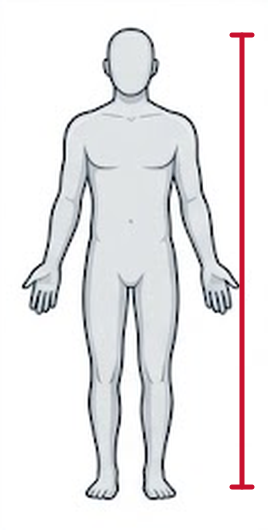
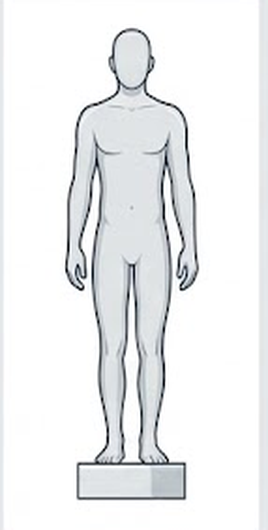
Standing in skates, an uncut stick with the toe of the blade on the floor should reach somewhere between your chin and your nose. Shorter favours stickhandling and quick hands; longer favours reach and a harder shot. Defencemen often go longer, forwards shorter. Without skates, add roughly 5 cm to your target.
Flex
Flex is how much force it takes to bend the shaft, and a good starting point is half your body weight in pounds: a 160 lb (73 kg) player starts around 80 flex. Too stiff and you cannot load the stick for a wrist shot; too soft and slap shots lose power. The catalogue flexes are grouped by level: youth 20 to 30, junior 40 to 50, intermediate 55 to 65, senior 70 to 100. The finder picks the closest catalogue flex for your weight and brand.
Cutting changes flex
Cutting a stick shorter makes it stiffer, by roughly 3 to 5 flex points per inch removed. If you will cut a lot, buy one flex softer than the rule suggests. Adding an extension makes it softer.
Junior, intermediate or senior?
These names describe shaft dimensions and flex range, not strictly age. A small adult may be happier on an intermediate; a strong 14-year-old may already need a senior flex. Choose by weight and length first and let the label follow.
Curve and lie
Beginners should start with a mid curve and a lie that lets the whole blade sit flat on the ice when they are in a skating stance. If the heel lifts, the lie is too high; if the toe lifts, too low. Fine-tune only after length and flex are right.